
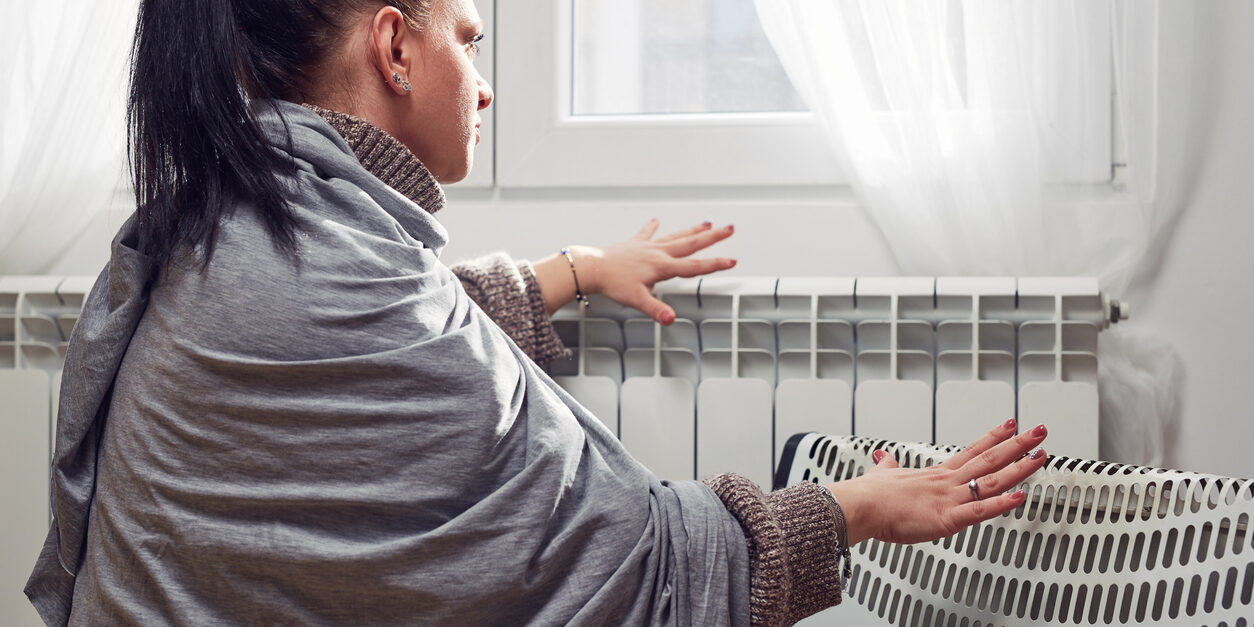
You turn on the heat on a cold Central Valley morning, wait for the warm air to kick in — and what comes out of the vents is cold. Or worse, lukewarm. It is one of the more frustrating HVAC problems a homeowner can run into, and it tends to happen at exactly the wrong time.
The good news is that cold air from a heater does not always mean a major repair. Several common causes are straightforward to check and, in some cases, to resolve on your own. Here is a practical guide to figuring out what is happening — and when it is time to call a professional.
Start Here: Check the Thermostat
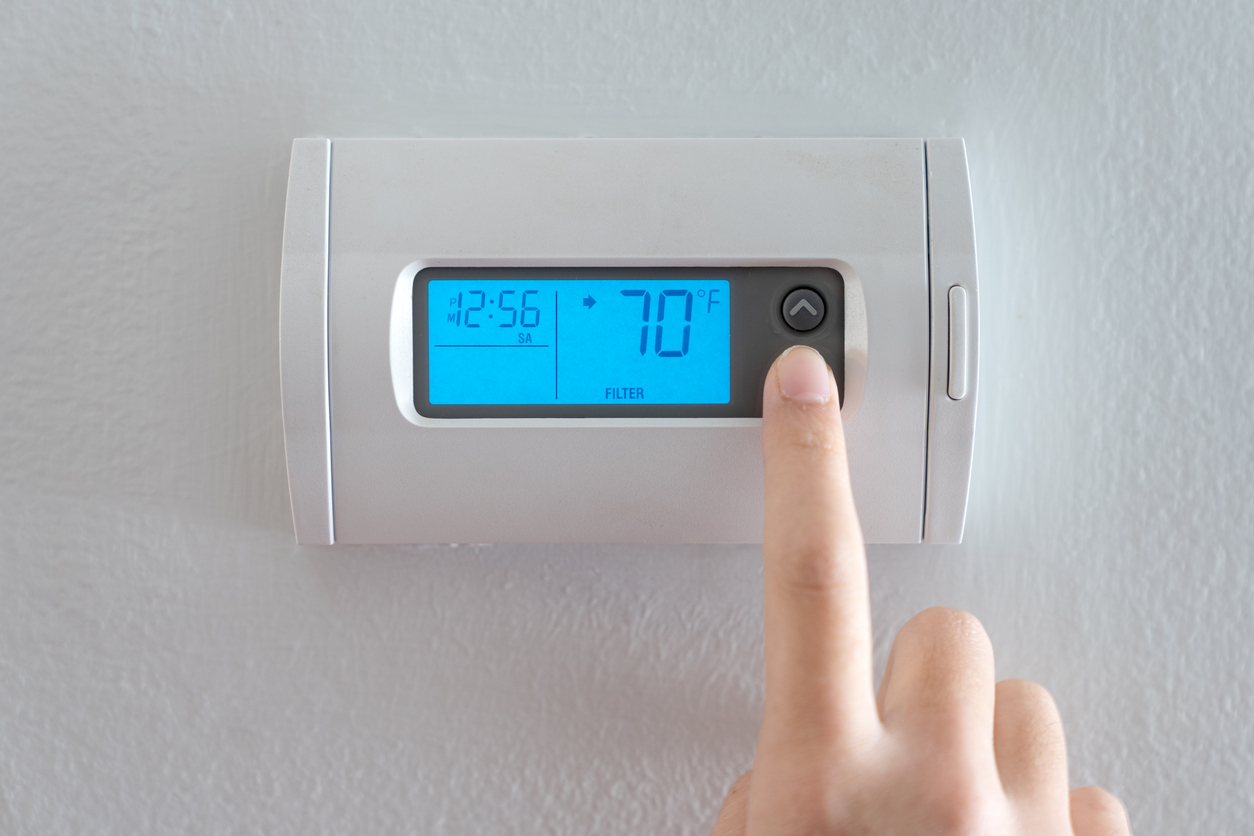
Before assuming anything is wrong with the heating system itself, take a look at the thermostat.
- Is it set to HEAT, not COOL? This sounds obvious, but it is an easy thing to overlook, especially at the start of the heating season or after someone else has adjusted the settings.
- Is the fan set to ON instead of AUTO? When the fan is set to ON, it runs continuously — including when the furnace is not actively heating. That means you will feel room-temperature air coming from the vents between heating cycles. Switching the fan back to AUTO usually resolves this immediately.
- Is the temperature set above the current room temperature? The thermostat will not call for heat unless the set point is above the actual room temperature.
If the thermostat settings look correct and the problem persists, move on to the next checks.
Check the Air Filter
A dirty or clogged air filter is one of the most common causes of heating problems — including cold air blowing from the vents. When airflow is restricted, the furnace can overheat. Most modern furnaces have a safety switch (called a high-limit switch or rollout switch) that shuts down the heating elements when the system gets too hot, even though the blower fan keeps running. The result is the blower pushing cool air through the vents even though the furnace appears to be running.
Check your air filter. If it is visibly clogged with dust and debris, replace it. If the system starts producing warm air shortly after, the filter was the culprit. Changing filters every one to three months is one of the easiest ways to avoid this problem entirely.
The Pilot Light or Ignition System
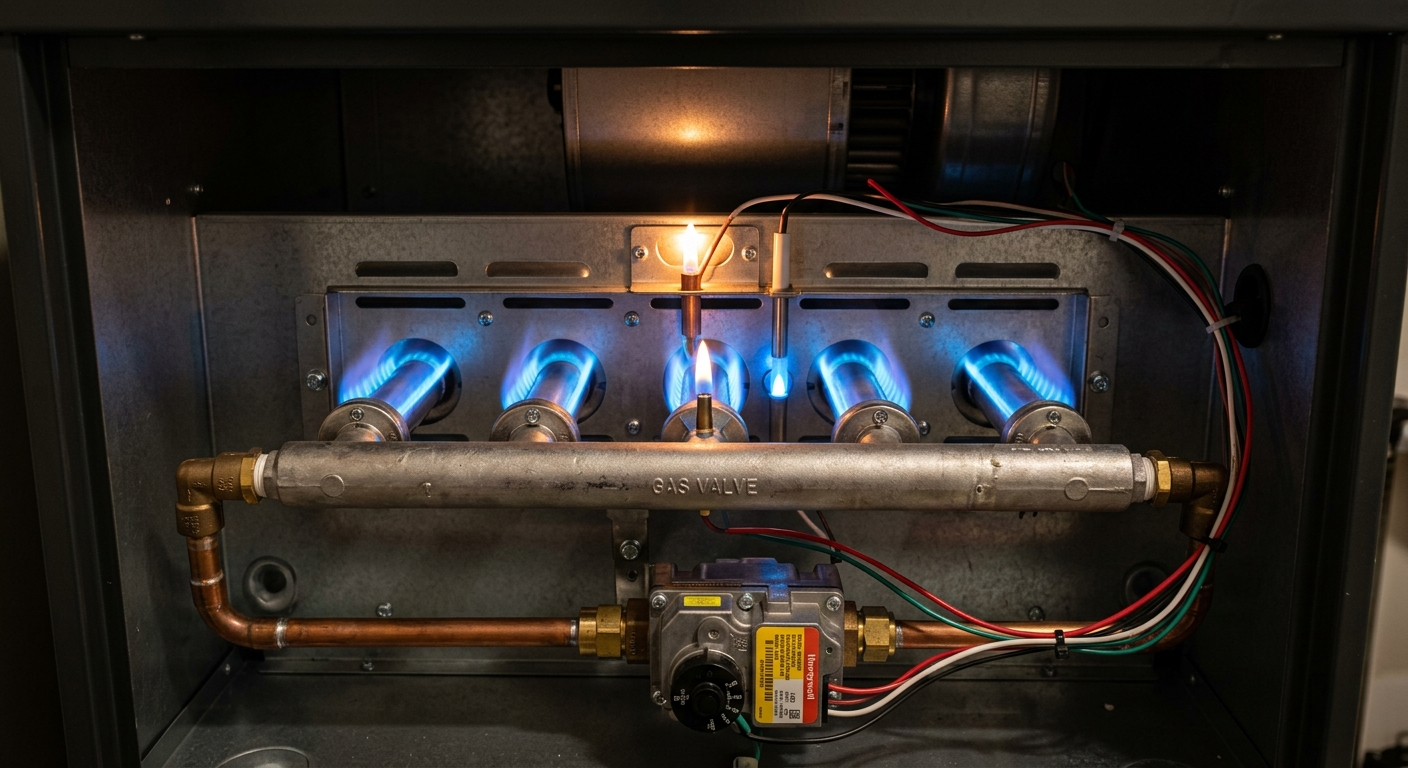
Older gas furnaces rely on a standing pilot light that should burn continuously. If it has gone out, the furnace cannot ignite and will not produce heat. You can check whether the pilot light is lit by following the instructions in your furnace manual — many units have a small window where you can see the pilot flame.
Relighting a pilot light is something many homeowners can do safely following the manufacturer's instructions. However, if the pilot goes out repeatedly, that is a sign of a more significant issue with the thermocouple or gas supply that should be looked at by a technician.
Newer furnaces use electronic ignition systems instead of a standing pilot. If the ignition system is failing, you may hear the furnace attempt to start — a clicking sound — but the burners never light, and the blower ends up pushing unconditioned air. This type of repair requires a professional.
Ductwork Issues
Even if your furnace is working correctly, you may experience cold air at the vents if there are leaks or disconnections in your duct system. Warm air escaping into unconditioned spaces like attics or crawl spaces can cause the air reaching your living areas to feel cool or only slightly warm. This is especially worth considering in older Fresno homes where ductwork may not have been inspected in years.
When to Stop Troubleshooting and Call a Professional
Some heating issues can be identified and resolved at home. But several causes of cold air from a heater are not safe or practical for a homeowner to handle:
- Gas supply issues. If you suspect a problem with gas flow or smell gas near your furnace, do not attempt any troubleshooting. Leave the house and call your gas provider.
- Failed heat exchanger. A cracked heat exchanger can allow combustion gases to mix with the air circulating through your home. This is a serious safety issue that requires immediate professional attention.
- Electronic ignition failure. Replacing an ignition module or flame sensor is a job for a certified technician.
- Repeated safety switch trips. If your furnace is shutting down on the high-limit switch even with a clean filter, there may be an airflow, venting, or heat exchanger problem that needs a professional diagnosis.
JC Melton Can Help
JC Melton Air Conditioning has been diagnosing and repairing heating systems in Fresno and the Central Valley for more than 70 years. Our technicians — including NATE Certified, ATT Certified, and EPA Certified professionals — can quickly identify the cause of a heating problem and give you an honest assessment of what it will take to fix it.
If your heater is blowing cold air and the basic checks above did not resolve it, give us a call at (559) 268-6286 or request a service visit online. We are here to get your home warm and keep it that way.