Most homeowners do not think much about their furnace until something goes wrong with it. And because Central Valley winters — while not extreme — are cold enough to matter, a failing furnace is not just an inconvenience. It is a genuine comfort and safety issue.
The challenge is knowing when a repair makes sense and when continued investment in an aging system is throwing good money after bad. Here is a practical look at the signs that a furnace replacement may be the smarter move.
The Age Question: How Old Is Too Old?
Furnaces are built to last roughly 15 to 20 years with regular maintenance. After that range, they are operating past their designed service life. This does not mean every furnace older than 20 years needs to be replaced immediately — some well-maintained systems keep running reliably beyond that — but age changes the math on repairs significantly.
A repair that is clearly worth making on an 8-year-old furnace may not be worth making on a 19-year-old one. The older system is likely to require another repair in the near future, its efficiency is well below what current systems offer, and parts availability may eventually become a limitation.
If your furnace is approaching or past the 15-year mark, include its age as a factor every time you evaluate a repair decision.
Repairs Are Becoming More Frequent
One repair every few years is normal for any mechanical system. But if you have called for furnace service twice in the past year, or if you have had a series of repairs over the past few years that have collectively added up to a significant cost, that pattern matters.
Heating systems tend to fail progressively as they age. One component reaching the end of its life often means others are close behind. Continuing to repair a system in that condition can feel like an endless cycle — each repair buys another few months before the next one.
When service calls become routine rather than occasional, it is a signal worth taking seriously.
Energy Bills Are Increasing Without Explanation
Furnace efficiency decreases as systems age, particularly without regular maintenance. If your heating bills have been climbing year over year but your usage patterns have not changed significantly, your furnace may be working harder than it should to produce the same amount of heat.
Modern high-efficiency furnaces carry AFUE ratings (Annual Fuel Utilization Efficiency) of 90% or higher, meaning 90 cents or more of every energy dollar goes directly toward heating your home. An older furnace may be operating at 70 to 80% efficiency or lower — a meaningful difference that shows up clearly on a monthly gas bill.
Uneven Heating Throughout the House
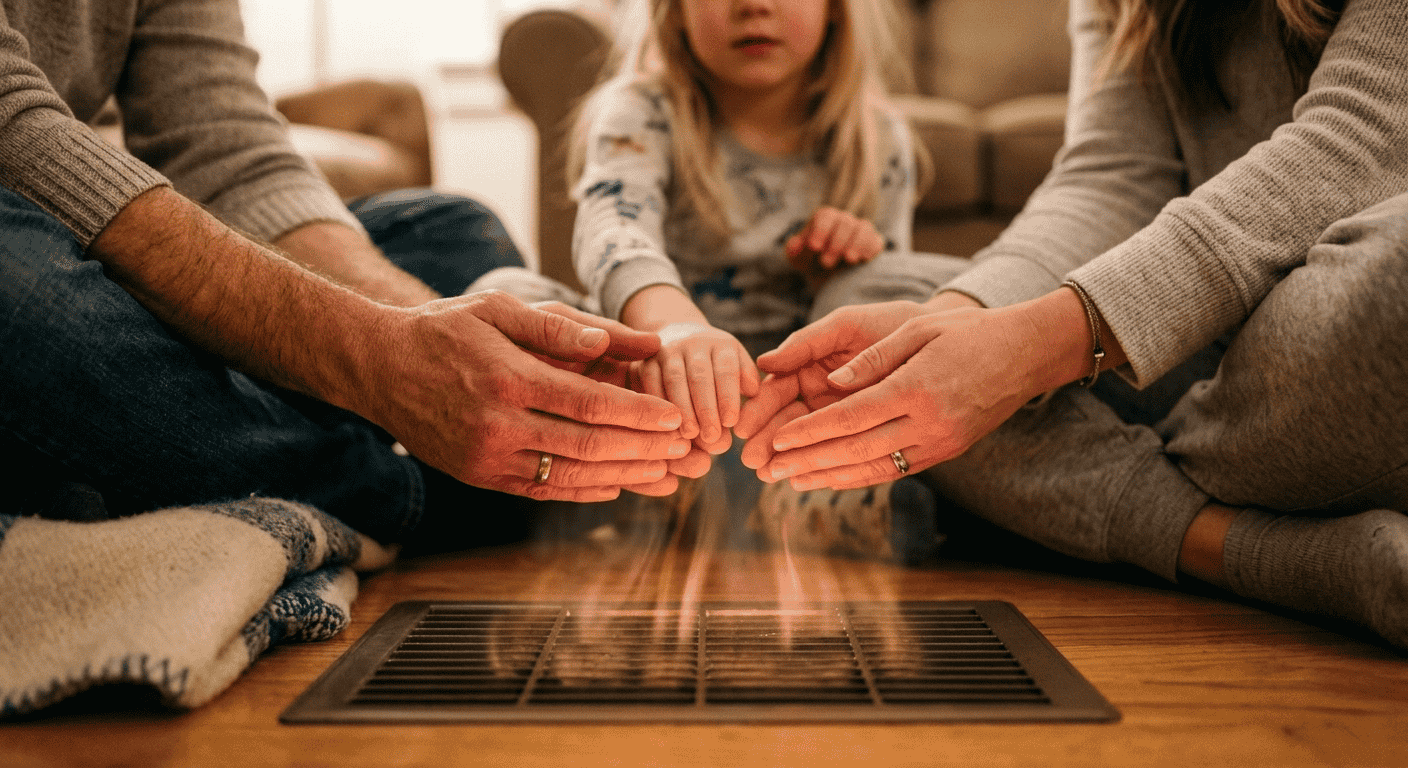
If some rooms in your home are noticeably cooler than others, or if the system struggles to maintain a consistent temperature throughout the house, the furnace may be declining in its ability to distribute heat effectively. This can also be related to ductwork, but when combined with other signs of an aging system, inconsistent performance is a meaningful signal.
Unusual Noises — Banging, Rattling, Popping, or Squealing
A furnace that has developed new sounds — particularly banging when it ignites, rattling during operation, or persistent squealing — is communicating mechanical wear. Some of these sounds have specific causes: a delayed ignition problem, a loose heat exchanger component, or a worn blower belt. Others are more diffuse signs of overall deterioration.
A technician can identify the source, but in an aging system, addressing one noise-producing problem does not mean others will not follow.
The Furnace Is Cycling On and Off Frequently
Short cycling — where the furnace turns on, runs briefly, shuts off, and then repeats — can indicate a problem with the heat exchanger, an airflow restriction, or an oversized system. It puts extra stress on the components and reduces both comfort and efficiency. In an older furnace, short cycling is often a symptom of a system that is struggling to maintain reliable operation.
A Cracked Heat Exchanger Is a Safety Issue, Not Just a Repair
The heat exchanger is the component that separates combustion gases from the air that circulates through your home. If it develops a crack, combustion gases — including carbon monoxide — can potentially enter the living space. This is a serious safety concern that warrants immediate professional attention.
A cracked heat exchanger in an older furnace often justifies replacement rather than repair, both because the repair is expensive and because the system has likely reached a point where other components are similarly worn.
When to Stop Repairing and Start Planning for Replacement
No single sign on its own demands an immediate replacement. But when you start checking multiple boxes — the system is 15 or more years old, repairs have been coming more frequently, efficiency has dropped noticeably, and comfort is inconsistent — the case for replacement becomes compelling.
The better approach is to plan for replacement before the system fails completely. A planned replacement can be scheduled at a time that works for you, allows time to select the right equipment, and avoids the pressure and limited options of an emergency installation in the middle of a cold snap.
Talk to JC Melton Before You Decide
JC Melton Air Conditioning has been servicing and replacing heating systems in Fresno and the Central Valley for more than 70 years. Our technicians — NATE Certified, ATT Certified, and EPA Certified — will give you an honest assessment of your furnace's condition and a clear-eyed recommendation on whether repair or replacement makes more sense for your situation.
We are not going to tell you to replace a furnace that has years of reliable service left in it. And we are not going to keep repairing a system that is costing you more than it is worth.
Call us at (559) 268-6286 or schedule a heating system evaluation online to get the information you need to make the right call.